Find Waterproof Rubber Grommets for Cable, Vehicle, Industrial
Explore 30 waterproof rubber grommets designed for cable protection, vehicle assembly, and industrial machinery. Compare material options like silicone and NBR, along with custom sizing and hardness specifications to identify the right fit for your project; compare the available evidence and request quotations based on your requirements.
Key considerations
Products List


Comprehensive Sourcing Guide
Waterproof Rubber Grommets Sourcing Guide
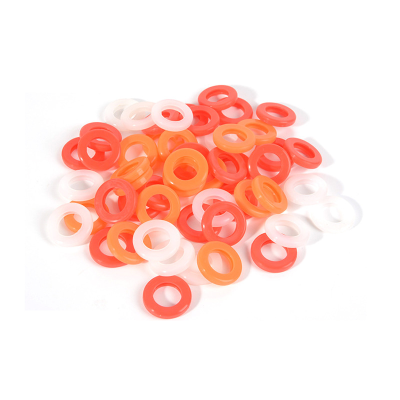
Procuring waterproof rubber grommets requires identifying components that effectively seal wire and cable entry points in industrial, vehicle, and household appliance environments. Buyers must distinguish between general industrial components and specialized units designed for medical or agricultural applications, as the sealing requirements vary significantly across these sectors. The observed market offers products with cross-sections ranging from mountain type circles to oval shapes, each serving distinct mechanical protection needs for different machinery types.
Sourcing decisions should prioritize the specific material composition, as listings indicate options including silicone rubber, NBR, Cr, SBR, and EPDM. Selecting the correct polymer is critical for ensuring chemical resistance and durability in the intended operating environment. Buyers should verify that the selected material aligns with the specific application, whether it involves protecting wires in electronic products or sealing components in heavy machinery, to prevent premature failure due to environmental stress.
Product Scope and Observed Listing Signals
The available product scope encompasses a wide variety of shapes and customization levels, including single-item selling units and bulk orders with flexible packaging options. Listings frequently highlight customization availability for size, color, and logo, allowing buyers to tailor grommets to specific design constraints. The observed data shows models like the DW25Q3D and CFRG-116, indicating that suppliers offer distinct part numbers for different functional requirements rather than a single generic solution.
Buyers must carefully evaluate the listed processing services, which often include molding, cutting, and extrusion forming, to ensure the manufacturing method matches the required tolerance and finish. The presence of various packing standards, from plastic bags to palletized cartons, suggests that logistics planning must account for different packaging configurations. Understanding these signals helps buyers anticipate the level of customization and the specific manufacturing capabilities required for their project.
Technical Specifications to Verify
Technical verification begins with confirming the hardness range, as observed listings specify values such as 30 to 80 Shore A or specific 70 Shore A ratings. This parameter directly influences the grommet's ability to provide a tight seal while maintaining flexibility under vibration or thermal expansion. Buyers should request detailed hardness data for their specific order to ensure the component will not degrade or lose its sealing properties under operational stress.
Cross-section geometry and size customization are equally critical, with observed shapes including O-rings, mountain type circles, and ovals. Since many suppliers offer custom sizes, buyers must provide precise dimensional drawings rather than relying on standard catalog dimensions. Verifying the exact cross-section shape ensures the grommet fits the cable diameter and housing aperture correctly, preventing gaps that could compromise the waterproof integrity of the assembly.
Compliance and Safety Documentation
While specific certification statuses vary, some suppliers list ISO9001 as a standard, indicating a baseline commitment to quality management systems. Buyers should explicitly request current certification documents to verify that the manufacturing facility adheres to recognized international standards for production consistency. Relying on general claims without documented proof can lead to compliance issues, especially when sourcing components for medical, vehicle, or industrial applications where safety regulations are stringent.
Documentation regarding material safety and environmental compliance is essential, particularly when grommets are used in household appliances or electronic products. Buyers must ensure that the specified materials, such as silicone rubber or EPDM, meet relevant safety standards for the intended end-use. Requesting material safety data sheets (MSDS) and confirming that the product standard aligns with the application's regulatory requirements helps mitigate liability and ensures long-term product reliability.
Cost Drivers and Commercial Terms
Cost structures are heavily influenced by the degree of customization, with factors like specific material selection, unique cross-section shapes, and custom logos adding to the base price. The observed price range of 0.01 to 6.91 USD suggests significant variance based on these variables, requiring buyers to balance performance needs with budget constraints. Understanding that complex molds or specialized materials like silicone rubber often command higher prices helps in setting realistic procurement expectations.
Commercial terms regarding minimum order quantities (MOQ) and lead times are critical for supply chain planning, with observed ranges spanning from 1 to 5000 units and delivery times between 7 to 20 days. Buyers should negotiate clear terms that align with their production schedules, as lead times can extend to 15-20 days depending on design complexity. Clarifying these terms early prevents delays and ensures that the supplier can meet the required volume without compromising on quality or delivery speed.
Supplier Qualification and Quality Control
Supplier qualification should focus on verifying the place of origin, as observed listings indicate production in Hebei and Guangdong, China, regions known for rubber manufacturing. Buyers must assess the supplier's capacity to handle specific processing services like molding and extrusion forming, ensuring they have the technical expertise to produce high-quality grommets. Checking the supplier's track record for handling custom orders and their ability to maintain consistent quality across different batches is essential for long-term partnerships.
Quality control processes must be rigorously defined, with buyers requiring evidence of inspection protocols for dimensions, hardness, and material integrity. Since customization is a key feature, suppliers should demonstrate their ability to maintain strict tolerances on custom sizes and shapes. Implementing a robust quality assurance plan that includes pre-production samples and final inspection reports ensures that the delivered grommets meet the specified technical and functional requirements.
Long-Term Procurement Checks
Long-term procurement success depends on establishing clear communication channels for design changes and ongoing quality monitoring. Buyers should maintain regular reviews of supplier performance, focusing on consistency in material properties and adherence to agreed-upon lead times. As applications evolve, the ability of the supplier to adapt to new design requirements or material specifications will be a key indicator of their reliability as a long-term partner.
Continuous verification of product standards and certifications is necessary to ensure ongoing compliance with evolving industry regulations. Buyers should periodically audit the supplier's quality management systems and request updated test results to confirm that the grommets continue to meet safety and performance benchmarks. This proactive approach helps prevent supply chain disruptions and ensures that the waterproof rubber grommets remain fit for purpose throughout the product lifecycle.
FAQs
What materials are used for waterproof rubber grommets?
These grommets are made from silicone rubber, NBR, CR, SBR, Sil, and EPDM. Suppliers offer customization to meet specific industrial or vehicle needs while ensuring durability and protection for wires and cables in various environments.
Can I get custom sizes for these rubber grommets?
Yes, custom sizes are available for most industrial components. Manufacturers accept design specifications to produce unique shapes like mountain type circles or ovals, ensuring a perfect fit for your specific machinery or household appliance applications.
What is the typical lead time for production?
Production lead times typically range from 7 to 20 working days depending on the order. Some suppliers require 15 to 20 days for custom designs, while standard items may be delivered within 7 to 15 work days after order confirmation.
Which certifications do these rubber grommet manufacturers hold?
Many manufacturers hold ISO9001 certification to ensure quality management standards. This certification verifies that production processes meet international requirements for consistency and reliability in supplying industrial components and vehicle accessories globally.
How are these grommets packaged for shipping?
Products are usually packed in plastic bags inside carton boxes. Some suppliers offer palletized packaging or custom packing solutions according to buyer requirements, ensuring safe transport for industrial components and electronic products during international shipping.
What hardness levels are available for silicone grommets?
Hardness levels typically range from 30 to 80 Shore A for silicone rubber products. Specific items may have a hardness of 70 Shore A, allowing selection based on the required flexibility and protection level for wire and cable applications.
Can I customize the color of the rubber grommets?
Yes, color customization is available including black and any Pantone color. Buyers can request specific shades to match their product design or branding needs while maintaining the functional properties required for industrial and medical applications.